 |
 |
|
PHIL OCHS - LAST OF THE TRUE REBELS By Keith J. Crocker
Writing an article of this sort is a trip back in time. I'm forced to have to remember 20 years or more of living. The importance in the remembrance is that you have to muster up the same type of feeling you felt when first exposed to the very subject you are writing about. I was introduced to the music of Phil Ochs by my best friend Paul Richichi during my college years. Paul is responsible for somewhat shaping some of my current taste in music, sharing music with me like it was a fine drug, something meant to open up your mind and take you to different places you've never been. Politically, I'm a middle of the road guy. I have a left hand, I have a right hand, I need both to function at my best level, as having only one leaves you crippled. On my quest in life to discover the truth, I went from far left to far right, only to discover I was at my best when planted firmly in the middle. Certainly, when Phil Ochs is discussed or referenced, it's always due to his affiliation with the New Left of the 1960's. As far as my view is concerned, Ochs was a conflicted individual, not quite the lefty everyone makes him out to be, but by no means a right wing conservative, at least not to the image one dreams up when they hear "right wing". In 1984, I started college. Like most (or all) college students, I was very much full of myself, felt that I was going to be the next best thing to sliced bread, and felt a tad immortal, to boot! Needless to say, it's the college students job to be rebellious, to stand up against oppression and in general be an opinionated asshole. Ochs wrote an anthem to indifference called A Small Circle of Friends, which was inspired by the murder of Kitty Genovese in the mid sixties. Kitty screamed endlessly while assaulted by a lunatic, and none of the generally elderly folks who lived in the apartment complex would come to help. Ochs song was a comical expose of the mentality behind indifference, summed up in the line "we gotta move, we might get sued, it looks like it's going to rain". The first time I heard this song, I doubled over in laughter. The more and more I listened to it, the more and more it rang true of the indifference to humanity that culture was experiencing in the early eighties. Remember, this was the decade of the shopping mall, the mega mark of consumerism;"buy, buy, buy... eat food till you feel better, or your ready to burst, whichever comes first". Point is, this one song alone bonded me to Ochs, I felt like I had discovered a man who felt the very same way I did about issues, very much like a soul mate. It was the shot in the arm I needed in 1984. I had been pressured into getting engaged to a girl I was dating since high school, I went from the begrudge of high school right into a new high school, now called college. I took school loans to pay for my education, so I was now introduced to the pleasure of "owing" something. So Ochs just sort of fueled my need to explode, to question, to assert independence, but most of all to think. This is very important because most college professors DO NOT want you to think, despite the fact that you are at the institution to learn. Rather, the college professor would rather shape the way you think, kind of like the way a bonsai tree is carved into a peculiar shape. So when I heard Ochs espouse in the song I'm Gonna Say it Now;"Oh you'd like to be my father, you'd like to be my dad, and give me kisses when I'm good and spank me when I'm bad... but since I've left my parents I've forgotten how to bow, so when I've got something to say sir, I'm gonna say it now", it totally captured my thoughts on the college professor and the very new form of fascism they were leveling at me. And the more I resisted, the more I failed, because I wasn't a good student to begin with, and actually considered these wounds of failure my battle scars. It's better to fail than conform was my mind set, inspired by Ochs sarcasm and Christ's moment on the cross.
But just who was this Phil Ochs, where did he come from, how did he become involved in the movement? My research tells me that Phillip David Ochs was born to a Scottish mother and a Polish/Jewish American father who was an army medic. Phil was born on December 19, 1940 in El Paso, Texas. This is where his father was stationed. Ochs later moved with his family to Ohio, where he spent a piece of his childhood. Ochs was a huge fan of 50's rockers Elvis Presley and Jerry Lee Lewis. Ochs even attended a military academy after high school. He had no interest in politics until he became friendly with Jim Glover, who's parents were socialists and often espoused the virtues of socialism to a captivated Ochs. Ochs became fascinated with the concept of blending music with humanitarian politics. Both Ochs and Glover decided to become a duo and started up a group called "The Singing Socialists". Ochs decided to wander America, very much like his idol Woody Guthrie. He was arrested for vagrancy in Florida, and while in prison started putting pen to paper and writing songs. Ultimately, Ochs ended up in New York during the burgeoning folk scene. He began rubbing shoulders with the likes of Bob Dylan, Tim Harden, Tom Paxton, Eric Andersen, Dave Van Ronk. It's during this time that Ochs will develop a love/hate relationship with Dylan. It's also during this time that Ochs will prove himself to really be Dylan's contemporary. Truth be told, Ochs was the one man who could have been Dylan's only true competition, as Ochs writing skills where as extraordinary as Dylan's, the only things that stood in Ochs way was politics, his own followers, and his own self destructive tendencies. It's interesting in that Dylan, who is considered a spokesman for his generation, quickly in his career came to the conclusion that politics was bullshit. Ochs, on the other hand, really believed the politics he espoused, and really felt he could change the course of direction of the world via topical song writing. Dylan will go on to achieve a God like status among the 60s generation, while Ochs is still the least acknowledged when it comes to social consciousness and the movement. The main reason for this is that Ochs was true to himself and the causes he sung about. Furthermore, like Woody Guthrie before him, Ochs could be foul tempered, was very open about his feelings regarding the entertainment industry, and would later lash out against the very people who's causes he took under his wing. His directness made him the enemy of the left just as much as he was despised by the right. Ochs was the first man to tell you that liberals were phony elitist ass wipes who's whole idea of solving problems was to throw money at it. That wasn't just a statement, it was and still is a truth. And he had the balls to sing about it... "And we'll send all the money you ask for, just don't ask us to come on along, love me, love me, love me, I'm a liberal". Considering that Hollywood follows the liberal path of enlightenment, it's no wonder to me that a film about Ochs has never been produced, but rather they produced a film on Abby Hoffman, a loud mouth, attention seeking manic depressive who's contributions to the movement pale by comparison to Phil. To most people, the 1960's was a party, to Phil Ochs it was an opportunity to change the status quo.
Throughout the 1960s, Ochs was a steady performer, who despite the 100 neurosis's that plagued him, performed with valor, humor, charm, and reliability. Often Ochs would forgo paying gigs to perform at benefits and rally's. Ochs really did not care for the commercialization of the movement, he felt songs like Eve of Destruction, by Barry Maquire, were nice to listen to but useless when it came to stopping war and inhumanity, proof was in the pudding in that Eve of Destruction received wide airplay, while the bulk of Ochs songs were kept off the radio altogether. And needless to say, Maquires song did nothing to halt Vietnam and it's predecessors. I like Eve of Destruction, but it certainly lacks the power of I Ain 't Marching Anymore, White Boots Marching in a Yellow Land, or even Draft Dodger Rag, which was actually Ochs spoofing the excuses students were using for not fighting in the war. Although Ochs declared that he started out a raging Marxist, later to turn Democratic Socialist, what I see is actually a man who really loved this country, felt it was great, just, and wanted it to continue upholding the same standards that brought it together in the first place. Ochs believed in intellectual debates, unlike Hoffman and Jerry Rubin, who liked to curse at authority figures just for the hell of doing it. Ochs did not believe in desecrating the American flag, in fact he rescued one such trampled flag at an political rally and folded it properly. He was not in for theatrics, where as Hoffman and Rubin were looking to further their reputations through their actions. If anything, Ochs was too much an American nebbish, usually performing in a suite, rarely if ever using foul language, he was not a drug user (other than alcohol, but more on that later) and felt that drugs were purposely leaked into the country in a effort to weaken the youth movement, which indeed did happen. Furthermore, he felt that events like Woodstock was not just commercialized garbage, but outright dangerous in that bringing together that many hippies, lefties, talent, etc the government could easily converge it's military and wipe out all those people in one shot, sort of an instant concentration camp attended by willing inmates. We would learn later that the government didn't need to do a thing, the attendees of Altamont were more than willing to wipe each other out!
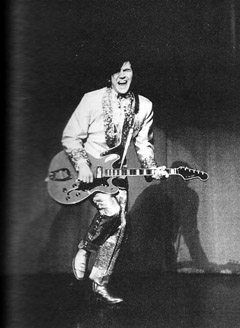
The 70s, politically, were a major letdown. The exuberance of the movement was deflated by the assassinations of the Kennedy's, King, etc... It was evident that you couldn't change everything, maybe a few small things, but all in all the power structure continues as it pleases. Needless to say, Ochs was demoralized. But bear in mind, it wasn't just the politics that got him down. Ochs was a depressive personality, throughout the height of his creative years he always flirted with the idea of suicide. His song I've Had Her, She's Nothing is an ode to suicide. Furthermore, Ochs was very disappointed by his lack of personal success. Initially, he really wanted to be Elvis Presley. His politics curtailed that. So did his fans. In 1970 Ochs believed that the only way for an entertainer to change the world was to become a fusion of Che Guvera and Elvis Presley. When Ochs decided to don a gold lame suite and perform 1950's numbers at a concert in Carnagie Hall with a full band behind him, his audience went berserk, chiding him like he was a turncoat. Dylan went through the same thing when he teamed with the band for his historic 66' tour. Dylan chided the audience back, he hurled the fruit back at them. Ochs made the mistake of trying to reason with the audience, he spoke to them like friends, trying to get them to understand his point. And while it's a noted fact that he did win the audience over, Ochs would never again play with a band. To make matters worse, Ochs was rip-roaring drunk at the concert, proof positive that his persona was coming apart. Show an open wound, and people will dive for it. In my mind, it's obvious that the audience of liberals attending that show were in their prime form, doing what liberals do best, judging, condemning, showing how un open to change they are, especially change that doesn't fit their rhetoric! Ochs went back to being the Ochs that his ass hole audience wanted, in fact an ad for a performance he gave at Hunter College in '71 shouts "The Return of the Original Phil Ochs...Live...In Person ...Himself...Guaranteed". Yeah, God forbid he comes on with a band, wouldn't want to upset those liberal fascists. Ochs went back to being the Ochs everyone wanted to see. Frustrated with his artistic neutering, suffering from writers block, and sick of the business in general, Ochs decided to travel. First, South America, later South Africa. Jerry Rubin traveled to Chile with Ochs. Ochs would later reveal the Rubin's main reason for traveling to South America was to score drugs. Ochs partook in student rallies, and ultimately meet folk hero Victor Jara. They became friendly, and sang on the same stage. Jara was later killed in a military coup that would overthrow the government of Salvador Allende. This was a major blow to Ochs, not only did the 1960's movements die with Chicago Democratic convention of '68, but foreign countries on the verge of change were quickly falling into the hands of brutal military regimes with the aid of the United States and the CIA. Then to add insult to injury, while Ochs was visiting South Africa he was mugged by a moron who crushed his vocal cords and damaged his vocal range. Ochs would never again be able to hit the notes he once hit.
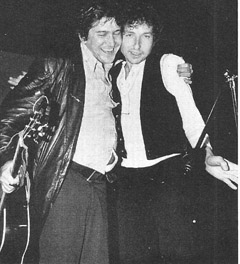
Here is were the downward spiral really kicks in. Ochs organizes a benefit for victims of the brutal overthrow in Chile. He pulls together a who's who of guests, and tops it all off when he convinces Bob Dylan to come and sing. The show sells out, but the backstage drinking gets out of hand and everyone, including Dylan, end up giving a less than stellar performance. Ochs continues to drink, in fact un-drunken performances become less and less. He becomes bloated, ill tempered, and begins to speak openly about people he knows in an unkind manner. In an interview with Harry Smith, he refers to Dylan as a "Cheap little Jew". He may not have been wrong about this, but this type of talk does nothing to help Phil's popularity. In my opinion, this talk is Ochs final acts of rebellion, sort of his way of voicing his displeasure with just about everything around him. It also exposes his true feelings about himself. During a concert from '74 Ochs sings Here's to the State of Richard Nixon. He explains that it's a revamping of Here's to the State of Mississippi. Ochs explains that he "felt like a turncoat" for singing about Mississippi, and though he said he felt "Mississippi was the worst place on earth" when he wrote it, regretted the insult because Ochs himself believed that he was a true blue Southerner, having been born in Texas. Plus he fancied himself a rebel, he viewed himself as Dixie and Dylan as the Union. In fact, Ochs sings The Blue and the Gray at Folk City one night while Dylan is in the audience. The song is about the Civil War. Dylan was at Folk City shootings scenes for his rockumentary Renaldo& Clara, which also spotlighted Dylan's Rolling Thunder Tour. Ochs was supposed to be a part of that tour. Dylan nixed the idea because Ochs drunken behavior was getting out of hand. Ochs resented this tremendously, adding that he originally came up with the idea of Rolling Thunder and that Dylan sort of took the idea from him. By 1975 Ochs has just about burnt all his bridges. He's banned for all the clubs, he wanders around Manhattan very much like a homeless person. All the bloodsucking maggots that Manhattan has to offer come out of the woodworks, basically leaching off Ochs. Both his mother and his sister try to get him psychiatric help but he very seldom follows up appointments. So disgusted with himself, Ochs actually takes on another persona, that of John Train. Most likely he drew the inspiration from his childhood hero John Wayne. This alternate personality sang classic folk songs, such as Fraulien and Shoals of Herring. Bear in mind that Ochs was manic depressive, not schizophrenic like Peter Green, Syd Barret, Skip Spence, etc... This other personality was invented by Ochs in an attempt to escape himself, depression often making you want to crawl out of your own skin. Anyhow, Ochs took to living with his sister in Far Rockaway, New York. Though it seemed he was pulling out of his depressive state, Ochs felt he had done quite a bit of damage in his John Train persona. He ultimately decided to hang himself on April 8, 1976. We ended up loosing one of the finest topical singers this country had to offer. There will never, ever be another Phil Ochs again. On May 26, 1976, Ochs brother Michael pulls together a tribute concert for Phil. The concert sells out. Guests included Melanie, Pete Seegar, Eric Andersen, David Blue, Tim Harden, Danny Kalb, Patrick Sky, etc... Tom Rush sings Say Goodbye, Again, and never before has a song hit with such a punch. Odetta rivets us to our seats with medley of songs comprised of It's Got To Be Me, The River is Wide, and You've Pleased Me. So ghostly is her delivery that it sends chills down the spine. Harden does Pleasures of the Harbor, and he couldn't have picked a better number. Jerry Ruben and William Kuntsler delivered speaches.Abby Hoffman, in trouble with the law, actually attended the event in disguise. The only one not in attendance was Dylan, who was rehearsing his Rolling Thunder in Florida when he heard the news. He supposedly retreated to his room, didn't come out for over an hour, and when he did emerge he never mentioned the incident again. Usually, every year since then Ochs sister pulls together a folk tribute in honor of her brother, with various old and new folkies turning up and doing their thing. In closing I'd like to mention that despite recent attempts at protest and activism, no one has been able to communicate more than Phil Ochs did, it really seems that with him God broke the mold, and one can only wonder what Ochs would have to say about today's political climate?! Hey, are you looking for some rare, live Phil Ochs audio and video? Well look no further, hop on over to my Sound & Vision page, all you could possibly want is right there. If you don't see what your looking for simply ask me, I have tons of stuff not even listed!
|
 |





 |
 |